Fic: Victoria

For a city forty miles from the infamous Forks, WA, Victoria gets surprisingly little rain. This is because the Olympic mountains catch all of it for us; on a good day, one can stand in the sun on Dallas Road and watch the rain fall on Washington.

But Dallas Road is all the way out in James Bay, and just the view isn’t worth the 45-minute walk from city hall when one has the glory of downtown to explore. I walk down to Chinatown past the condemned apartment building and the charming self-contained Victoria house, past the construction pit that will be the parking lot for the swank shops going in at the bottom level of the redone Hudson Bay building. The chirping ‘walk’ sign signals me, the two business-women in pumps and skirts, and the meth-head waiting on the corner to cross. I duck into the old brick yarn shop on the corner and browse for a minute, enjoying the air-conditioning and half-heartedly contemplating Christmas presents. It’s July, but if I’m going to make anything, now’s the time to start. But the sheer range in the knitting store makes it hard to choose, and intimidating; what if they judge me for using the wrong kind of yarn for the pattern I’ll inevitably have to buy? They’ve always been nice to me, but I’ve heard rumors about what led to the local knitting societies splitting in two.

Most of the local arts scene is like that, though; the two straight literary magazines are only on speaking terms because of shared editorial staff; the University-managed one is much pickier, and charges more for each copy (but also gives away more free copies), and they can, because they get government sponsorship. The community issue has an acceptance rate of an obscene twenty percent because, without the government sponsorship, they don’t have nearly the advertising budget, and so rarely sell out a print run. And neither of the straight literary magazines so much as acknowledges the Science Fiction magazine unless it’s winning another award; genre fiction makes both editorial boards uneasy and faintly afraid. They are more comfortable with poetry, and would publish their magazines entirely as chapbooks if they weren’t so much work and there was some clear way to pay the bills. And if Munro’s, the largest independent bookstore in the city, whose facade looks somewhere between a Greek temple and a Georgian bank, carried chapbooks. But Munro’s hallowed halls only carry things which have been machine-bound, and so the literary magazines continue contracting with the printers.

The yarn store doesn’t hold me long – people are trouping in for some class or other. I continue towards the harbour and Chinatown, and pass the Chinese school and the Lee Club and the city-commissioned mural which faces the building with the aged and faded “7-up: the Un-cola” ad taking up the upper storey and a half.

I’m in luck; the Chinese bakery is still open. I go in and jostle with four other customers in the shopfront the size of my bathroom to get my hands – separated by medium of tongs – on pineapple buns and melon bread and an egg tart and a Korean barbecue roll. The barbecue roll is still warm, probably fresh from the kitchen in the back, where the owner bakes everything on display. I buy my goods in cash from the owner’s wife in a nearly silent transaction; I speak Mandarin, not Cantonese, which in hindsight seems a silly choice. At the time I was planning things that were utterly derailed by Nanna’s Alzheimers. As I put my change away she goes back to an animated conversation with an old Chinese woman sipping a Tim Horton’s coffee. When people around me are speaking a language I don’t understand, I always have a sneaking suspicion they’re talking about me. Which I know is silly, but, well, I’ve caught some of the French-speakers here at it a few times. The best part is the looks on their faces when I spew Parisian gutter-French at them in retaliation.

I hurry past the tattoo parlor next door, where I can see some aging biker getting something on his bicep, and round the corner to Chinatown proper. It’s the second-oldest Chinatown in North America, and some locals will argue that it’s really the oldest, since San Francisco burned down in 1906 and therefore shouldn’t count anymore. Dragon Alley, which used to be one of the main housing projects in Chinatown, has been turned into upscale shops. It was first designed as a way to pack as many Chinese immigrants into one place as possible, according to the plaque on one wall, but it’s been ‘reclaimed’ by designer dog treats, an exclusive hair studio, and what I’ve heard is an upscale brothel, which has a lovely little water feature in front of it.

But Dragon Alley leads away from my destination, so after I’ve bought Ramune at the crowded Asian grocery store I jaywalk across the main drag of Chinatown (a sleepy two-lane cobbled street) and turn down what looks like a dingy access passage. It opens quickly into Fan Tan alley, the spinster sister of Dragon Alley. There are two resale shops, a used record store, and Triple Spiral, a shop that sells mostly jewelry and Tarot cards. All of the shopfronts are painted bright colors, even though the shopfronts themselves are just the strips of wood outlining windows and doors in the red brick of the colossal building they are all carved out of.

I could cut over to Wharf Street here, avoid all the foot traffic of the end of the work day, but I head to Government Street instead. It’s Thursday, which means that the chalk artist whose name I’ve never learned will have recreated another masterpiece on the sidewalk. I’ve only recognized two so far – Girl With A Pearl Earring and Mona Lisa – but they’re gorgeous, and I love that we have someone here who can do that. He’s done a detail from Waterhouse, this week. I stop in the middle of the sidewalk and juggle my bakery box to dig out a notebook and pen. I want to look up the full painting when I get home (I, unlike everyone even on this island out of time, don’t have a smartphone). I garner a couple annoyed looks from passerby forced to step around me, but other people are slowing to look at the chalk, too.

Past the gargantuan Bay building, which dominates arguably between one and four city blocks, depending how you divvy up the warren of downtown into “blocks,” it’s an easy slope downhill to the Inner Harbour. Darth Vader, a local violinist, is just packing up for the day at his corner across from Visitor Information. I smile at him as I go past, though I can’t see whether he smiles back behind the mask. There’s always some kind of knot of tourists in front of Visitor Information, and I slip through them on my way to the stairs. The stairs hug the seawall on the way down, and are wide and shallow and a little uneven, since they’ve been part of the promenade for something like a century. As usual there’s a mix of homeless artists under patio umbrellas obviously nicked from the seafood grill just up the stairs and around the corner and professionals doing caricatures and selling art cards from small tables. I meander down the promenade to the dock for the bum boats, those tiny little water taxis roughly the size of minivans. If it weren’t for the ocean kayakers, they’d be the smallest thing on the Inner Harbour.

Jeremy finishes his shift, and the bum boat tours for the day, in about twenty minutes, so I park on one of the oversized steps of the promenade, tucking my skirt around me. A quick glance at the Visitor Information clock tower affirms that, yes, I haven’t been able to magically skip ten minutes in the walk down the stairs. I open the bakery box and dig out one of the melon breads to pick at while I wait for him. It’s a far cry from the high tea being served above me and across the street at the Empress Hotel; iconic finger sandwiches in a formal English garden that now hosts a statue of Emily Carr, our homegrown leading light in art. I did tea there once, when I was visiting Nanna a few years ago. When Nanna would think of things like that, and still had the wherewithal to plan them. We’d done a tour of the Legislature, too; the center of government that also served as building-shaped art framing a third of the harbour. The Empress, by the same architect in the same sweeping and gothic style, makes up the center third. And on the left as you entered the harbour is Visitor Information with its useful but entirely unimpressive Art Deco clock tower.

Jeremy is finally done, and I rise to meet him, brushing off the back of my skirt. I snag his arm, and we walk companionably back to his condo in James Bay for dinner and my own personal escape from the obligations that lurk in the heart of downtown.
Cadence

I’ve been writing a lot of short fiction recently – character studies and microplots and things from a dozen different perspectives – and one of the things that’s been most interesting to work on is cadence. It’s part and parcel of syntax, of course, and I’ve always put sentences together a little weirdly. Sometimes it’ll take me a couple passes before I can get something that reads fine and concise to me to parse to anything meaningful at all to other readers.

Part of this is that I learned French as a written language before English, and narrative and dialog have always been very different creatures to me. Dialog just needs to sound like people talk, and I can do that. Narrative needs its own flow, needs to be interspersed with enough dialog, needs to convey information and move plot along without getting mired in itself.

It’s the cadence of narrative that I’ve been working on, how quickly or slowly or trippingly different stories need to go. Re-ordering sentences in ways that do nothing to improve clarity is a new thing for me, but it’s been necessary in working on cadence.

Maddeningly, I’ve so far not found a way to work on cadence that doesn’t involve revision and paying attention. It’s almost like writing is something that requires effort.

Dishes

Right now, I’m stuck on a chapter.

I have the chapter outlined: hell, I have the next four chapters outlined, and the last one I have rough ideas about. It’s just a matter of getting the words done.

But they won’t come. I went back to the beginning of the chapter to read it through and tweak parts and see if I could get the words unstuck. I haven’t been able to get all the way through it, because something’s just awkward, and I can’t pinpoint it, and I know I won’t be able to go forward until I can.

So I go through my checklist of things that make writing difficult for me:

Am I ill? No.

Have I slept enough? Yep!

Have I eaten? I had delicious Italian with my dad a few hours ago, and I’m still comfortable from that, though no longer in danger of a food coma. I’m good on that front.

Do I have more pressing obligations that I feel guilty about not accomplishing? Nope, I’ve finished work for the day, I’ve made good progress, I’m good on that front.

Am I physically uncomfortable? Well, the temperature’s fine, but my back and upper arms kind of think trying the plank exercise yesterday was a bad idea. It’s not bad, though, and not distracting while I’m doing nothing more strenuous than typing.

Am I thirsty? Huh, a little bit. I should get a drink.

Is my environment distracting? Well, I’m home alone in the apartment, and it smells nice because we have candles that make it smell like a bakery with a vanilla fetish. I have music on quiet, and adequate light, and my comfy chair, but there’s a cardboard box in the corner from a thing we unpacked last night, and dishes in the sink that I know I need to deal with.

So I’m going to go do dishes and drink water and recycle and hope that when I’m done this stupid fucking chapter stops being hard to write. If that fails I may knit and read for a while.

Design

One of the reasons I’m on Blogger rather than WordPress is that I love the back end. It’s high-contrast and the writing area for posts is big and there are fewer buttons.

I like simple. I like clean. For this blog, I don’t need the advanced design and media that come with WordPress, because all I’m doing is blogging. WordPress is where I work, Blogger is where I play.
I didn’t leave everything completely default, though. I have pages – all there visible at the top – because I do things and you can give me money for them. In my sidebar I have a short bio and a pic because it tells you who you are reading, and a list of links to find me on those other sites that I regularly use, and a place to subscribe by email or publicly recommend my blog. I have my archives, neatly in drop-downs, so that you can navigate. I have a cloud of tags, to give you another way to navigate and also because it amuses me greatly that the tag ‘Seneca Crane’s beard’ has more than one post attached to it.
I have a blogroll of other sites to check out, because some of my friends and family also have internet presences and that’s neat. I also have the World Community Grid square there, because that’s a neat project that more people should be involved in.
Most of the blog is black and white, because that’s easy to read, and I like easy to read and simple. The background is yellow because I wanted some colour, and yellow is cheerful. I also picked yellow because I looked up some stuff on colour-blindness and it looks reasonably similar no matter what kind of colour-blindness one has. That was a thought, because my dad is colour-blind and I’m ridiculously sentimental.
Sometimes design is about more than just branding, or other factors, like wanting it no-fuss, will inform branding and design decisions. For me, it was important that these decisions be made deliberately, because I didn’t want to put something together only to change it later when I thought of something better.

Tutorials

As part of the great diaspora of talent on the internet, a lot of things, such as writing, that can be learned about through degree programmes or books on the subject, can also now be learned about through short instructional written bits, called tutorials.

For a lot of people, me included, it’s nice to be able to look up a specific piece of information and be told about the process. That’s how I re-taught myself to knit, too: I went to knittinghelp.com and watched videos of how to cast on and then watched knitting videos, and then, when I was working on other projects, looked up specific increases and decreases.

But my thoughts on knitting are not what you’re here for.

Actually, I’m not sure what you’re here for, as apparently most of you are Russian Linux users and therefore probably cooler than me.

Writing tutorials are interesting. I posted one a couple weeks ago – more of an insulting crash course in the addressing comma, but it does count as a tutorial. I normally don’t do those. I normally don’t do anything approximating tutorials, because I am not comfortable speaking from a position of authority about writing in general. I am willing to go on for several minutes [link goes to audio file] about things that don’t work for me at all as a writer or reader, but I tend not to spend a lot of time on the things that work for me. This is because different things work for different people, and there is no one true way to write.

For example, Horatio Alger and Stieg Larsson were both bestselling authors. I adore Larsson’s prose, but reading Alger makes me want to stab myself in the face. These preferences mean that I do not have an absolute authority on what makes popular writing, and popular writing is often what people are aiming for in their endeavors. Therefore any tutorials by me would not address a full spectrum of possible right ways. I feel, then, that any tutorials I could write would be less than ideal, and, as a perfectionist, I therefore refrain from writing them (swearing about addressing commas is different: it is possible to be objectively wrong).

Other people have different approaches, and some people write fantastic writing tutorials because they can get over being obsessively perfectionist and just write down the things they know that work. What sparked this post, though, was a tutorial on writing fanfiction that has received a great deal of positive feedback. Holy shit, people, use your critical thinking skills when assessing whether something is good advice or not. Just because someone can put together The Ultimate Handbook or whatever does not automatically mean they have any idea what they’re talking about.

Project Update #2

The project I mentioned last time has been sidelined for the moment – there are still things with tone and voice and world that I have to hammer out. If I’m not deeply invested in her story, why would anyone else be?

In the meantime, I’ve been working on EMTstuck, another Homestuck fanfiction. I have the main story, which progresses slowly, and I’ve been trying to write a blurb a day. Some days I don’t manage it, while some days are really productive, so I’ve been queuing posts so that one comes out per day. It’s a great, low-stress way to get words out: the world is already pretty fleshed out, as are the characters. There’s no urgent plot, and all the readers are already familiar with everything. I get to write to get words out, and practice writing tight voice.

I finished a novella, which should be out soon. I started the sequel to it, which is going to address the concept of family secrets. But as the first one took three years, I think the second one probably will, too, and I’m not going to force it. Setting it up the way I did, the first one has the best emotional impact of anything I’ve written. I’ll talk more about that next week, though – I might even have other good news relating to it.

I’ve also been working on a short story, set in the fourteenth century, which is going to be about 8000 words when done.

This is one of the reasons EMTstuck is important – it gets me writing even when I’m not absorbed in something, so that my skills don’t atrophy completely while I’m knitting this dress.

Commas, dialog, and swearing

I read a lot of free romance novels.

A lot.

We’re not going to go into numbers here, because I have no idea: I delete most of them as soon as I finish, if not before. There’s a reason for that!

There’s a lot I’m willing to forgive in free books: medical implausibility, silly premise (I actually go out of my way for pretending-to-be-married and arranged marriage stories), slavish adherence to archetype. One thing that drives me absolutely batty, though, is absence of the addressing comma and other failures at punctuating dialog.

Thus, I present an educational short story:

“Motherfucker, where is my cheese?” asked John. John is calling for Steve’s attention by addressing him. Because calling for his attention is not integral to the rest of the sentence, it gets a comma after it. ‘Asked’ is not capitalized because it is part of the dialog tag: it is adding context to the way the words are being said.

Steve shrugged. “Why should I know? Have you checked the fridge, asswipe?” Steve shrugging is a separate sentence before he speaks: shrugging is not a way of communicating words in spoken language, so it is not a dialog tag, just an action that occurs in the same paragraph. If I wanted only one sentence, it would begin ‘Steve shrugged, saying, “Why. . ..”‘ Asswipe is not capitalized, because it is an epithet and not a proper name.

It is not motherfucking hard, motherfuckers. There is a comma before motherfuckers because this whole post can be taken as an apostrophe to people who keep messing it up, and I like calling people names.

First of the year

My new year this year was sadly lacking in both bagpipes and Auld Lang Syne, but I got to spend it with a couple of my favourite people, just hanging out and being silly.

This year, I am living in Wisconsin, trying to get reciprocity for my BC EMR license.

This year, I am working entirely online, trying to keep myself to regular work hours and focus, with mixed success.

This year, I have a completed novella waiting for a cover before it’s published, and a lot of confidence.

I’ve also gotten a lot more comfortable with my fannishness, because fanfiction is fun and relaxing and allows a focus on a specific thing or interaction or theme, which can be communicated more clearly because readers are already familiar with canon.

I’ve knit more things, too, including my first pair of socks. Up for this year: a sweater-dress.

A Rant

I have no idea why anyone would feel motivated to get a Bachelor of Arts in Creative Writing. I think the fact that many young people do so is indicative of widespread fuzzy thinking and incompetent guidance counselors.

Creative writing BAs do not guarantee publication. Publication does not guarantee that you can make a living writing. Creative writing BAs do not give you marketable skills that will keep you employed while you try to write.

I have met a recent graduate with an Honours BA in Creative Writing who had interned at respected, award-winning magazines and who had no idea the difference between proofreading and copyediting.

I have met a recent graduate with a BA in Creative Writing who thought that a BA qualified her to be a professor, and was bewildered when that job did not appear before her.

I do not know any additional Creative Writing majors, because I make a point of cultivating friends who are not going to be crippled by debt for years for no more valid reason than fuzzy thinking.

Creative Writing, as a major, gives you more of an appreciation for good writing. This is all very well, but it doesn’t teach you marketable skills: Journalism requires people skills, the ability to work under pressure, and basic spelling and grammar. This means that you finish a journalism program with marketable, transferable skills.

I know of no graduates with Creative Writing BAs who were able to translate their degree into widely-useful skills. I know of no recent graduates with Creative Writing BAs who became employed in their field just after graduation. I do not consider it fuzzy thinking to infer a correlation.

Creative Writing seems an eminently practical degree if you:

  • are only looking for self-improvement, not necessarily a job
  • are already published and raking in dough at a rate that will pay your tuition and living expenses, but trying to improve your skills
  • are actually pursuing an MRS, but need a BA as a cover
  • are going to inherit a solid family business and already have a sibling who is an accountant


I do not see the practicality of it outside those and related circumstances.

And I do consider practicality eminently relevant to higher education. It’s expensive, so if it is a bad return on investment, it doesn’t make sense to do it until you are financially stable enough that tuition will not require onerous loans.

“But!” you cry, “how will I improve my writing to the point of perfection if not by majoring in Creative Writing in university?”

By not stopping writing? By diligent practice? By learning critical thinking skills that can be applied to everything? By learning about things that inspire you to write and equip you to get jobs that will inspire you to write and also support you while you do so?

Creative Writing BAs are like the little blue pills: they both seem like a good idea and a way to jump-start something good, but really you’re just fooling around, because practice and critical thinking will both affect the end result far more than the artificial aid ever could.

Discuss:
– Additional reasons majoring in Creative Writing is terrible.
– What you majored in/are majoring in, and how you have applied it to your writing.

Feels

There are words like saudade that refer to explicit emotional states, and convey a wealth of meanings. In English, we have many and varied words for nearly everything, but we don’t have anything that means the same thing as saudade. The closest we can get is nostalgia, or love for something that has gone and can never be again. They convey nearly the same thing, but not as precisely or neatly.

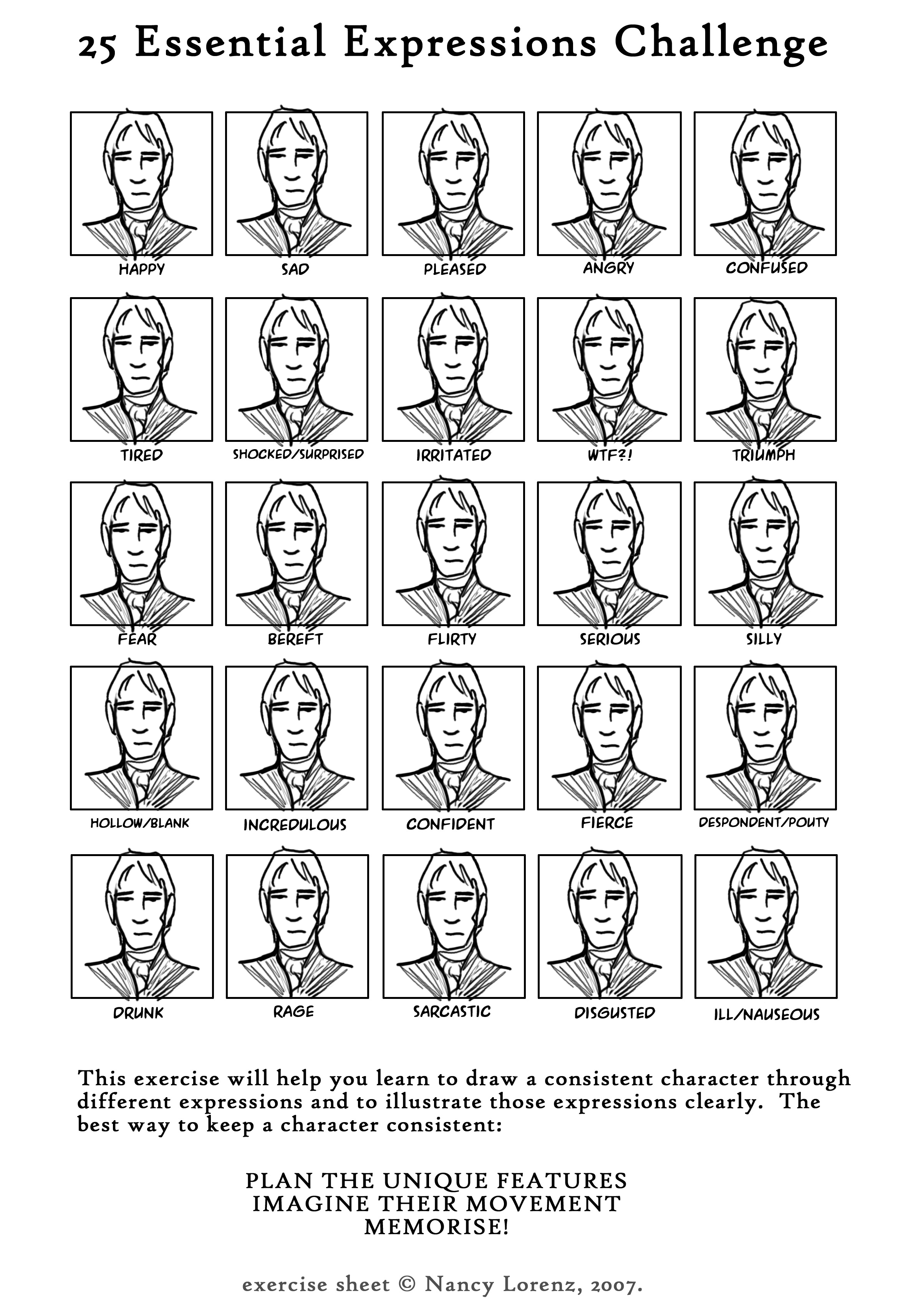
We have a lot of emotional vocabulary, because language is about communication, and nuance of feeling can be difficult to convey. A great deal is conveyed by facial expressions and body language.

Usually more than this. Art by http://darcybing.deviantart.com/.

Part of the emergent vocabulary Tumblr exposes me to includes the word ‘feels’ as a noun. Usage includes such phrases as ‘all of the feels’ and ‘right in the feels.’ A literal definition would be something like ‘heart,’ but this carries more of a connotation of addictive heartbreak. Something that hits one right in the feels might make one cry every time one reads it, but one revisits it often anyway.