Project Update #2

The project I mentioned last time has been sidelined for the moment – there are still things with tone and voice and world that I have to hammer out. If I’m not deeply invested in her story, why would anyone else be?

In the meantime, I’ve been working on EMTstuck, another Homestuck fanfiction. I have the main story, which progresses slowly, and I’ve been trying to write a blurb a day. Some days I don’t manage it, while some days are really productive, so I’ve been queuing posts so that one comes out per day. It’s a great, low-stress way to get words out: the world is already pretty fleshed out, as are the characters. There’s no urgent plot, and all the readers are already familiar with everything. I get to write to get words out, and practice writing tight voice.

I finished a novella, which should be out soon. I started the sequel to it, which is going to address the concept of family secrets. But as the first one took three years, I think the second one probably will, too, and I’m not going to force it. Setting it up the way I did, the first one has the best emotional impact of anything I’ve written. I’ll talk more about that next week, though – I might even have other good news relating to it.

I’ve also been working on a short story, set in the fourteenth century, which is going to be about 8000 words when done.

This is one of the reasons EMTstuck is important – it gets me writing even when I’m not absorbed in something, so that my skills don’t atrophy completely while I’m knitting this dress.

Commas, dialog, and swearing

I read a lot of free romance novels.

A lot.

We’re not going to go into numbers here, because I have no idea: I delete most of them as soon as I finish, if not before. There’s a reason for that!

There’s a lot I’m willing to forgive in free books: medical implausibility, silly premise (I actually go out of my way for pretending-to-be-married and arranged marriage stories), slavish adherence to archetype. One thing that drives me absolutely batty, though, is absence of the addressing comma and other failures at punctuating dialog.

Thus, I present an educational short story:

“Motherfucker, where is my cheese?” asked John. John is calling for Steve’s attention by addressing him. Because calling for his attention is not integral to the rest of the sentence, it gets a comma after it. ‘Asked’ is not capitalized because it is part of the dialog tag: it is adding context to the way the words are being said.

Steve shrugged. “Why should I know? Have you checked the fridge, asswipe?” Steve shrugging is a separate sentence before he speaks: shrugging is not a way of communicating words in spoken language, so it is not a dialog tag, just an action that occurs in the same paragraph. If I wanted only one sentence, it would begin ‘Steve shrugged, saying, “Why. . ..”‘ Asswipe is not capitalized, because it is an epithet and not a proper name.

It is not motherfucking hard, motherfuckers. There is a comma before motherfuckers because this whole post can be taken as an apostrophe to people who keep messing it up, and I like calling people names.

First of the year

My new year this year was sadly lacking in both bagpipes and Auld Lang Syne, but I got to spend it with a couple of my favourite people, just hanging out and being silly.

This year, I am living in Wisconsin, trying to get reciprocity for my BC EMR license.

This year, I am working entirely online, trying to keep myself to regular work hours and focus, with mixed success.

This year, I have a completed novella waiting for a cover before it’s published, and a lot of confidence.

I’ve also gotten a lot more comfortable with my fannishness, because fanfiction is fun and relaxing and allows a focus on a specific thing or interaction or theme, which can be communicated more clearly because readers are already familiar with canon.

I’ve knit more things, too, including my first pair of socks. Up for this year: a sweater-dress.

A Rant

I have no idea why anyone would feel motivated to get a Bachelor of Arts in Creative Writing. I think the fact that many young people do so is indicative of widespread fuzzy thinking and incompetent guidance counselors.

Creative writing BAs do not guarantee publication. Publication does not guarantee that you can make a living writing. Creative writing BAs do not give you marketable skills that will keep you employed while you try to write.

I have met a recent graduate with an Honours BA in Creative Writing who had interned at respected, award-winning magazines and who had no idea the difference between proofreading and copyediting.

I have met a recent graduate with a BA in Creative Writing who thought that a BA qualified her to be a professor, and was bewildered when that job did not appear before her.

I do not know any additional Creative Writing majors, because I make a point of cultivating friends who are not going to be crippled by debt for years for no more valid reason than fuzzy thinking.

Creative Writing, as a major, gives you more of an appreciation for good writing. This is all very well, but it doesn’t teach you marketable skills: Journalism requires people skills, the ability to work under pressure, and basic spelling and grammar. This means that you finish a journalism program with marketable, transferable skills.

I know of no graduates with Creative Writing BAs who were able to translate their degree into widely-useful skills. I know of no recent graduates with Creative Writing BAs who became employed in their field just after graduation. I do not consider it fuzzy thinking to infer a correlation.

Creative Writing seems an eminently practical degree if you:

  • are only looking for self-improvement, not necessarily a job
  • are already published and raking in dough at a rate that will pay your tuition and living expenses, but trying to improve your skills
  • are actually pursuing an MRS, but need a BA as a cover
  • are going to inherit a solid family business and already have a sibling who is an accountant


I do not see the practicality of it outside those and related circumstances.

And I do consider practicality eminently relevant to higher education. It’s expensive, so if it is a bad return on investment, it doesn’t make sense to do it until you are financially stable enough that tuition will not require onerous loans.

“But!” you cry, “how will I improve my writing to the point of perfection if not by majoring in Creative Writing in university?”

By not stopping writing? By diligent practice? By learning critical thinking skills that can be applied to everything? By learning about things that inspire you to write and equip you to get jobs that will inspire you to write and also support you while you do so?

Creative Writing BAs are like the little blue pills: they both seem like a good idea and a way to jump-start something good, but really you’re just fooling around, because practice and critical thinking will both affect the end result far more than the artificial aid ever could.

Discuss:
– Additional reasons majoring in Creative Writing is terrible.
– What you majored in/are majoring in, and how you have applied it to your writing.

Feels

There are words like saudade that refer to explicit emotional states, and convey a wealth of meanings. In English, we have many and varied words for nearly everything, but we don’t have anything that means the same thing as saudade. The closest we can get is nostalgia, or love for something that has gone and can never be again. They convey nearly the same thing, but not as precisely or neatly.

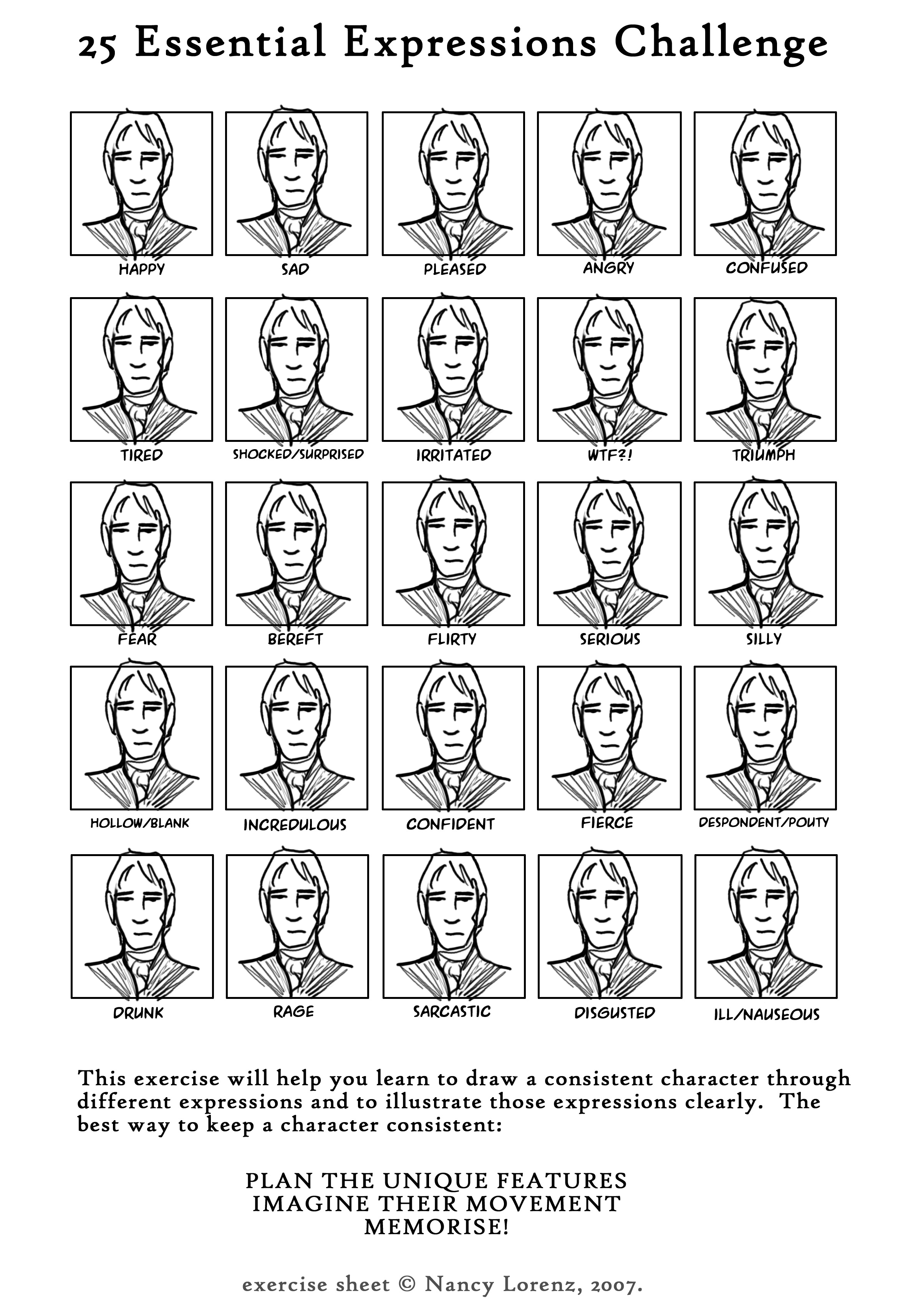
We have a lot of emotional vocabulary, because language is about communication, and nuance of feeling can be difficult to convey. A great deal is conveyed by facial expressions and body language.

Usually more than this. Art by http://darcybing.deviantart.com/.

Part of the emergent vocabulary Tumblr exposes me to includes the word ‘feels’ as a noun. Usage includes such phrases as ‘all of the feels’ and ‘right in the feels.’ A literal definition would be something like ‘heart,’ but this carries more of a connotation of addictive heartbreak. Something that hits one right in the feels might make one cry every time one reads it, but one revisits it often anyway. 

In which I talk about memetic density

This entire post is going to be a deconstruction of the title.

‘In which’ is not merely an informative phrase to indicate the contents of the post: it is a reference to the way Diane Wynne Jones, amongst others, starts chapters in her books. Each chapter title doubles as a summary of the chapter, and adds amusing context, such as “In which Sophie talks to hats” and “In which Howl expresses his feelings with green slime.”

By the way, I love my roommates. I wrote this while still in Victoria, sitting in Starbucks. It had been a couple of years since I read Howl’s Moving Castle, and I’d forgotten whether the introductions to the chapters were the chapter titles or separate headings. Google searches and Google Books and Amazon and Kobo were all turning up blanks: all I wanted was the first page.

Both of my roommates are bibliophiles who don’t get rid of their books, so I just got on Skype and asked out of the blue whether they had a copy and asked them to check for me. Only one of them had a copy, but between them they both had a copy and knew what I was looking for and were able to answer without checking, and then able to link me to the TVTropes page discussing the wider use of the convention.

It is stylistically striking enough to stick with a reader, and allusion to it both establishes formal context and informal social context: by title this post in this way I am affirming that I read, that I read for fun, and that I retain it and consider it important to the way I interact with the world. Using descriptive titles, particularly with the ‘In which’ format, is language that establishes personal context as well as the explicit context inherent in a descriptive title.

Seem like a lot to try to communicate with two words?

Yeah. And I’m not done!

The title of this post is first-person. Normally, descriptive titles are presented third-person. Using first person here does a couple of things:

  • Establishes that this is a meta-contextual post examining the linguistics involved in addition to participating.
  • Avoids referring to myself in the third person, which is awkward at best and impenetrable and pretentious at worst.
  • Let’s me avoid choosing which name to refer to myself as: I go by Eileen because it is my name and using anything else in an even semi-professional setting would feel really weird. But I also answer to Chiomi, which is a nickname I’ve had since high school and still go by among close friends. I am also called PK in some writing contexts, as an abbreviation of phantomkitsune, the username I win stuff under in Adam’s contest. On the website where I am known as PK, I’ve made several contacts with people who’ve become good friends and with whom I discuss writing a great deal. Using first person lets me bypass that issue completely.
Now to the verb. I used ‘talk’ as opposed to ‘discuss’ or ‘write’ because, given the dearth of comments here and the fact that I’m mostly unpacking a sentence, discussion does not seem a sure thing. ‘Write’ I discarded because the tone I use in my blog is a lot closer to the tone I use in casual speech than what I would use in an essay. Pontificate, which would have served just as well, was discarded because of reasons.
The preposition, I feel, is reasonably straightforward and does not require exposition.
Memetic density has to be addressed as a compound to make sense. A meme is a unit of culture. For example, I have an extremely pedantic coworker, through whose influence all of us who work with him have become more linguistically precise. I have on more than one occasion called him a memetic disease because of this effect. So memetic density is how many ideas are communicated by a word or phrase. Memetic density and the effectiveness thereof is, fairly obviously, culture-dependent. I was able to understand a fair number of the references in Terry Pratchett’s Soul Music because my dad introduced me to classic rock. If I didn’t have that context, I would be missing a lot of the references in the book. The memetic density would be lost. Knowyourmeme.com is one of the best resources for making sure that modern references aren’t lost, because it catalogs widespread memes.
As this entire post suggests, a lot of meaning can be conveyed in a few context-specific words. It’s just a matter of knowing the context.
Note: thoughts like this are why it takes me forever to finish many of my writing projects.
Project Update #1

I’m starting to seriously work on a project I had the initial idea for over two years ago. It started with a vivid image, of someone walking home in the dark in the rain. They were walking past trees, and they were resigned to the wet, and they were accompanied by a God.

At the time, I wrote it down, but I didn’t think I had the skill to do the idea justice.

It’s my active project right now. I have other images – of standing on a hill in a thunderstorm wearing a fedora, of characters throwing things at deities for being thwarted romantically – and they’re starting to come together. I’m editing the first couple of thousand words fiercely, because my skill has grown in the past couple of years and I am better able to see where I’m missing my mark in tone and voice and pacing.

With all of the critiquing I’ve done in the past couple of years, I’m much better able to cut to the heart of the matter, which has led to a new style of outlining for me: I just write down what happens as briefly as possible. It’s like the blocking run for a theatrical performance: none of it is costumed in prose, there are no microphones, the set’s in place but not finished being painted. The second run is what’s going to let me fill in the blanks, but right now this is looking like it’ll be a much faster and more efficient way for me to write.

Burnout Mode

I firmly don’t believe in writer’s block. I think that it’s usually a matter of needing more planning, or to work on a different project. I can’t comprehend a world where someone is actually stuck and unable to write: there’s always backtracking to see how you wrote yourself into a corner, or outlining, or editing something else, or doing silly flash fiction to give your brain a break from the next Great American Novel.

But sometimes I hit a wall, and will stare at a scene I have planned out and have an overwhelming sense that if I write it, it will all be crap. Sometimes I stare at a list of projects I could work on and can’t even articulate cogent reasons why I should work on one over the other. Sometimes every single thing I put on screen is absolute crap and I want to delete the entire project.

I don’t think this is writer’s block. It’s nothing to do with the writing itself, or the story fighting me, or the characters misbehaving. It’s a sign that I am completely burned out, and need to have a glass of water and a nap. It’s a sign that the only creative output I’m capable of at the moment is knitting to a pattern.

Writer’s block is an annoying aspect of magical thinking: it gives writers problems that no one else has. Self-care is a universal issue that does not care what you do.

Spoiler: this post is super-short because I have a headache and knitting i-cord is about what I’m up to mentally.

Community

It amazes me when I encounter people who say they have no one to talk with about writing.

This is a case of privilege: I grew up with parents who write (even if they are journalists and collectively despair of my structure), I had a group of friends in high school who started a writing group, most of the friends I made online became friends in the context of writing or some form of creative output (did you know: for two years I helped run and moderate an art critique and virtual-money pricing thread). I joined the Victoria Writers’ Society soon after I got here, and I I’ve been to Meetups about writing and PEAVI meetings and a conference about writing and book launches and poetry readings. When I wanted to find people who were also into writing, I was in a town that had lots of other people with similar interests, and I had a framework such that I had no problems seeking them out.

So when I encounter people who have no one to talk writing with, I am faintly befuddled and tend to either adopt them or refer them to the Internet, depending on my mood and their familiarity with technology.

Writing is not a solitary pursuit. I am not convinced it has ever widely been a solitary pursuit. The Bronte sisters had each other to talk to, Jane Austen had family to read her works to, Kerouac had the entire Beat movement.

Having people to talk to about writing helps refine ideas and thoughts about it. Brainstorming tends to be more productive if someone else is there to ask questions or point out when something is really obviously quite illogical. Having people to talk to about writing means having people who’ll remind you that yes, this is something you like spending your free time doing, why haven’t you written a word in a week? Having people to talk to about writing means that, when you’ve finished a piece for a contest with a deadline, you can have two people whose opinions about writing you trust read it in an afternoon.

For me, the internet is how I’ve found these people. Well, the internet, and people I still know from high school and university. But I’m still in touch with them over the internet, and that’s where we talk about writing. I’ve found people on Tumblr and on an anime site I joined when I was 14, and through friends of these people. Others have found communities on Absolutewrite or Deviantart or Meetups or Critiquecircle or Fictionpress or Wattpad or any of a dozen others. If you’re looking for a community, it can be worth checking out anything you can find to locate the people you’ll click with.

I’ve found it really worthwhile.

Anonymity, Again

There’s a disadvantage to having grown up with the internet: every stupid thing one said when one was thirteen is up here forever.

And, despite whatever steps one took to be less traceable: never using your real name, never posting your city, etc. there’s always, always a temptation to have a linked identity. So if you use a username on Livejournal it might be tempting to use it on Deviantart and then, well, it’s practically a brand, so you might use it on Etsy, too. And then you do commissions or pay someone to do a commission for you and you use your paypal, which, a lot of the time, is going to have your name attached to it, because your money needs to at some point pass through something with your name attached.

So you yourself would have attached your real name in a long roundabout way to the things you posted on Livejournal lo, these many years ago.

And that’s not even bringing up Facebook. This afternoon, a friend told me she’d been being harassed by someone she met in a chat room. The harassment was happening on Facebook, but he’d blocked her after she told him she didn’t appreciate the threats, so she didn’t have access to his page anymore, which she kind of wanted to gather information to go to the police.

Google to the rescue! I have this guy’s name and the country he lives in. I was able to, in very short order, provide a decent picture (decent as in it fits most of the guidelines for ID photos), all of the biographical information he has online (including names and pictures of his parents and sibling), and links to his Facebook profile, Formspring, and Twitter accounts. The usernames on the Formspring and Twitter were not similar to his name, but he’d input his full name into the information anyway, so this was all in the first page of Google results.

Things he did on the internet, in cyberspace (which some people, including friends of mine, sometimes consider as less real than things which happen face to face), are going to result in criminal charges for this young man.

I can almost guarantee he didn’t expect this: if you block someone on Facebook, they’re supposed to be gone forever! But they’re not. Things which happen online are quite, quite real, and a number of us have some or all of our professional lives on the internet.

Anonymity or even approximations thereof can be detrimental to building a brand if one is trying to be a professional online. Anonymity can seem like a great bastion if one is trolling on the internet, and even the format itself can be seen as a buffer.

But anonymity is a very, very hard to attain and maintain. That’s why the creator of Cryptocat is being persecuted so very hard. Anonymity is vital for political agitation and protest under an oppressive regime, but there’s a natural tendency to want to slip up and have people you are speaking to acknowledge you as a person. When it’s trolls who are enabling me to hunt down all their information to neatly package for the cops, this is great. When it’s protesters who end up beaten and jailed for trying to change the world for the better, it is quite a bit less than great.

But the fact of the matter is that, unless one is taking extraordinary measures, you are not anonymous.