Feels

There are words like saudade that refer to explicit emotional states, and convey a wealth of meanings. In English, we have many and varied words for nearly everything, but we don’t have anything that means the same thing as saudade. The closest we can get is nostalgia, or love for something that has gone and can never be again. They convey nearly the same thing, but not as precisely or neatly.

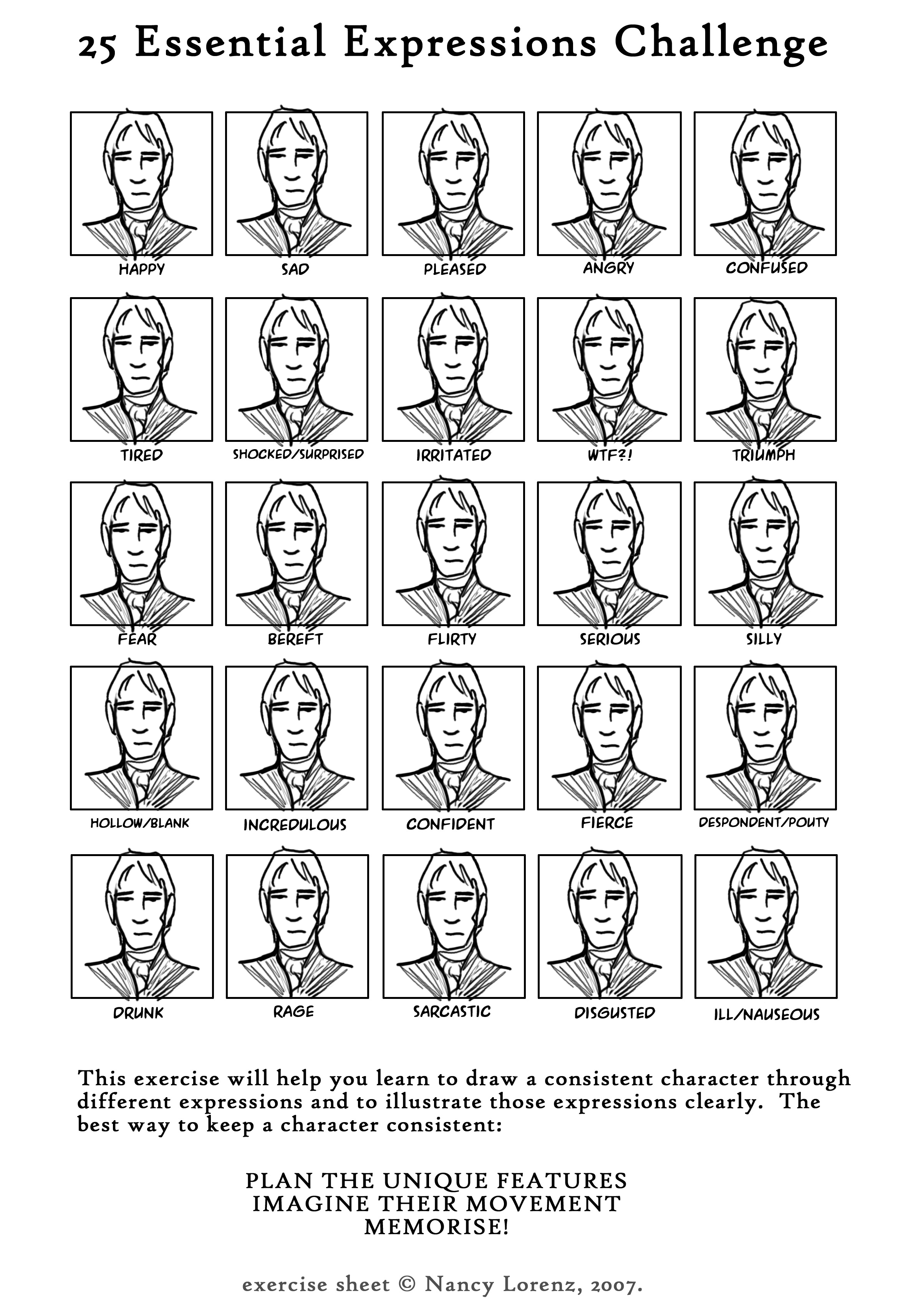
We have a lot of emotional vocabulary, because language is about communication, and nuance of feeling can be difficult to convey. A great deal is conveyed by facial expressions and body language.

Usually more than this. Art by http://darcybing.deviantart.com/.

Part of the emergent vocabulary Tumblr exposes me to includes the word ‘feels’ as a noun. Usage includes such phrases as ‘all of the feels’ and ‘right in the feels.’ A literal definition would be something like ‘heart,’ but this carries more of a connotation of addictive heartbreak. Something that hits one right in the feels might make one cry every time one reads it, but one revisits it often anyway. 

In which I talk about memetic density

This entire post is going to be a deconstruction of the title.

‘In which’ is not merely an informative phrase to indicate the contents of the post: it is a reference to the way Diane Wynne Jones, amongst others, starts chapters in her books. Each chapter title doubles as a summary of the chapter, and adds amusing context, such as “In which Sophie talks to hats” and “In which Howl expresses his feelings with green slime.”

By the way, I love my roommates. I wrote this while still in Victoria, sitting in Starbucks. It had been a couple of years since I read Howl’s Moving Castle, and I’d forgotten whether the introductions to the chapters were the chapter titles or separate headings. Google searches and Google Books and Amazon and Kobo were all turning up blanks: all I wanted was the first page.

Both of my roommates are bibliophiles who don’t get rid of their books, so I just got on Skype and asked out of the blue whether they had a copy and asked them to check for me. Only one of them had a copy, but between them they both had a copy and knew what I was looking for and were able to answer without checking, and then able to link me to the TVTropes page discussing the wider use of the convention.

It is stylistically striking enough to stick with a reader, and allusion to it both establishes formal context and informal social context: by title this post in this way I am affirming that I read, that I read for fun, and that I retain it and consider it important to the way I interact with the world. Using descriptive titles, particularly with the ‘In which’ format, is language that establishes personal context as well as the explicit context inherent in a descriptive title.

Seem like a lot to try to communicate with two words?

Yeah. And I’m not done!

The title of this post is first-person. Normally, descriptive titles are presented third-person. Using first person here does a couple of things:

  • Establishes that this is a meta-contextual post examining the linguistics involved in addition to participating.
  • Avoids referring to myself in the third person, which is awkward at best and impenetrable and pretentious at worst.
  • Let’s me avoid choosing which name to refer to myself as: I go by Eileen because it is my name and using anything else in an even semi-professional setting would feel really weird. But I also answer to Chiomi, which is a nickname I’ve had since high school and still go by among close friends. I am also called PK in some writing contexts, as an abbreviation of phantomkitsune, the username I win stuff under in Adam’s contest. On the website where I am known as PK, I’ve made several contacts with people who’ve become good friends and with whom I discuss writing a great deal. Using first person lets me bypass that issue completely.
Now to the verb. I used ‘talk’ as opposed to ‘discuss’ or ‘write’ because, given the dearth of comments here and the fact that I’m mostly unpacking a sentence, discussion does not seem a sure thing. ‘Write’ I discarded because the tone I use in my blog is a lot closer to the tone I use in casual speech than what I would use in an essay. Pontificate, which would have served just as well, was discarded because of reasons.
The preposition, I feel, is reasonably straightforward and does not require exposition.
Memetic density has to be addressed as a compound to make sense. A meme is a unit of culture. For example, I have an extremely pedantic coworker, through whose influence all of us who work with him have become more linguistically precise. I have on more than one occasion called him a memetic disease because of this effect. So memetic density is how many ideas are communicated by a word or phrase. Memetic density and the effectiveness thereof is, fairly obviously, culture-dependent. I was able to understand a fair number of the references in Terry Pratchett’s Soul Music because my dad introduced me to classic rock. If I didn’t have that context, I would be missing a lot of the references in the book. The memetic density would be lost. Knowyourmeme.com is one of the best resources for making sure that modern references aren’t lost, because it catalogs widespread memes.
As this entire post suggests, a lot of meaning can be conveyed in a few context-specific words. It’s just a matter of knowing the context.
Note: thoughts like this are why it takes me forever to finish many of my writing projects.
Project Update #1

I’m starting to seriously work on a project I had the initial idea for over two years ago. It started with a vivid image, of someone walking home in the dark in the rain. They were walking past trees, and they were resigned to the wet, and they were accompanied by a God.

At the time, I wrote it down, but I didn’t think I had the skill to do the idea justice.

It’s my active project right now. I have other images – of standing on a hill in a thunderstorm wearing a fedora, of characters throwing things at deities for being thwarted romantically – and they’re starting to come together. I’m editing the first couple of thousand words fiercely, because my skill has grown in the past couple of years and I am better able to see where I’m missing my mark in tone and voice and pacing.

With all of the critiquing I’ve done in the past couple of years, I’m much better able to cut to the heart of the matter, which has led to a new style of outlining for me: I just write down what happens as briefly as possible. It’s like the blocking run for a theatrical performance: none of it is costumed in prose, there are no microphones, the set’s in place but not finished being painted. The second run is what’s going to let me fill in the blanks, but right now this is looking like it’ll be a much faster and more efficient way for me to write.

Burnout Mode

I firmly don’t believe in writer’s block. I think that it’s usually a matter of needing more planning, or to work on a different project. I can’t comprehend a world where someone is actually stuck and unable to write: there’s always backtracking to see how you wrote yourself into a corner, or outlining, or editing something else, or doing silly flash fiction to give your brain a break from the next Great American Novel.

But sometimes I hit a wall, and will stare at a scene I have planned out and have an overwhelming sense that if I write it, it will all be crap. Sometimes I stare at a list of projects I could work on and can’t even articulate cogent reasons why I should work on one over the other. Sometimes every single thing I put on screen is absolute crap and I want to delete the entire project.

I don’t think this is writer’s block. It’s nothing to do with the writing itself, or the story fighting me, or the characters misbehaving. It’s a sign that I am completely burned out, and need to have a glass of water and a nap. It’s a sign that the only creative output I’m capable of at the moment is knitting to a pattern.

Writer’s block is an annoying aspect of magical thinking: it gives writers problems that no one else has. Self-care is a universal issue that does not care what you do.

Spoiler: this post is super-short because I have a headache and knitting i-cord is about what I’m up to mentally.

Community

It amazes me when I encounter people who say they have no one to talk with about writing.

This is a case of privilege: I grew up with parents who write (even if they are journalists and collectively despair of my structure), I had a group of friends in high school who started a writing group, most of the friends I made online became friends in the context of writing or some form of creative output (did you know: for two years I helped run and moderate an art critique and virtual-money pricing thread). I joined the Victoria Writers’ Society soon after I got here, and I I’ve been to Meetups about writing and PEAVI meetings and a conference about writing and book launches and poetry readings. When I wanted to find people who were also into writing, I was in a town that had lots of other people with similar interests, and I had a framework such that I had no problems seeking them out.

So when I encounter people who have no one to talk writing with, I am faintly befuddled and tend to either adopt them or refer them to the Internet, depending on my mood and their familiarity with technology.

Writing is not a solitary pursuit. I am not convinced it has ever widely been a solitary pursuit. The Bronte sisters had each other to talk to, Jane Austen had family to read her works to, Kerouac had the entire Beat movement.

Having people to talk to about writing helps refine ideas and thoughts about it. Brainstorming tends to be more productive if someone else is there to ask questions or point out when something is really obviously quite illogical. Having people to talk to about writing means having people who’ll remind you that yes, this is something you like spending your free time doing, why haven’t you written a word in a week? Having people to talk to about writing means that, when you’ve finished a piece for a contest with a deadline, you can have two people whose opinions about writing you trust read it in an afternoon.

For me, the internet is how I’ve found these people. Well, the internet, and people I still know from high school and university. But I’m still in touch with them over the internet, and that’s where we talk about writing. I’ve found people on Tumblr and on an anime site I joined when I was 14, and through friends of these people. Others have found communities on Absolutewrite or Deviantart or Meetups or Critiquecircle or Fictionpress or Wattpad or any of a dozen others. If you’re looking for a community, it can be worth checking out anything you can find to locate the people you’ll click with.

I’ve found it really worthwhile.

Putting my money where my mouth is

A couple weeks ago, I posted about pseudonyms.

I’ve been having conversations about them since then, particularly about using them for different genres. Genre boundaries have diminshed a great deal in the last few years – particularly the ‘rule’ saying a writer should stick to one genre. And with online book stores, if a reader only wants books in a particular genre, that’s what tags and categories are for.

Tags are of particular concern in a lot of the fanfiction I read – writers are expected to tag for major character death or spoilers for canon, and for level of explicitness, and for whether it contains romance, and the genders of the people involved if it does. Writers are also expected to tag for graphic depictions of violence, underage characters in sexual situations, and rape or non-consent: these are things built in to the platform of Archive Of Our Own, which is where I post my work. There is a little checklist when you start a new story that lets you just tick the box for anything that might apply.

The social aspect of the community also encourages tagging for drug use, mental health issues, suicide, abuse, dysfunctional families – you get the idea. Things which might be upsetting to read to the point that someone would choose to actively avoid them get tagged*. There is such strong community impetus towards tagging that an author who chose not to include a specific tag (because it would have spoiled the entire plot) has actually been vilified because of not tagging.

But this is fanfiction, so things you’d want to look for, like specific pairings or stories about specific characters, are also tagged for ease of searching. A lot of tagging is about finding the particular reading experience you are looking for.

There is some of this available in original fiction, though obviously not to the same extent. Categories, though, offer very concrete ways to separate what one writes into genres without using pseudonyms.

So that’s what I’m going to do. I have no particular shame attached to writing erotica – I write smart fiction, no matter the genre, and I want people to find me and want to buy my stories based on that. That’s why all of my fiction under 3000 words will end up on here at some point, and everything over 3000 words will go up on my Smashwords (with the exception of Intervention, out on Feedbooks for a couple years already, and future novels that might end up out on other channels).

*This is also known as trigger warnings. For example, someone who has been raped might not be able to read about rape without having unpleasant flashbacks or intense anxiety that would ruin their entire day. Avoiding stories with rape in them is a lot easier if they say what they are on the tin.

Blog fiction hiatus

You may have noticed the lack of fiction updates the past couple of weeks. Their lack is partly because doing any more of them will involve either more trawling through my ancient archives or writing new flash fiction. Writing new flash fiction is currently on hold because I’m nearing the end of a project I’ve been working on since roughly the spring of 2010, and am really excited to finish.

It’s also because I’m moving. In two weeks time I’ll be on a bus headed from Seattle to Minneapolis as the middle and longest leg of my trip from Victoria to Madison. I’m moving for a multitude of reasons, and aside from my own abhorrence of moving and lack of car, it’s been a fairly straightforward process: I’m still going to be doing webwork for the same bike store I work in now. The only thing that will change is no customers and I can work in my pajamas. I am going from living with my mom, where I’ve been staying since the end of my lease, to living with my best friend who is already doing things like unpacking the boxes I’ve mailed and crocheting me my very own blanket. My EMR license is viable for reciprocity, so I don’t need to take classes again, just do NREMT exams and local jurisprudence, all of which I can set up there.

Regular Wednesday blog posts will continue for the duration, as I have them scheduled pretty well in advance, so the only difference should be the lack of fiction posts. 

Whitewashing

I’ve long been of the school of thought that if you aren’t part of the solution, you’re part of the problem. As I read more about racism in science fiction, anti-racism, and whitewashing, I’ve come to a dilemma:

All of the central characters in my YA novel are white. Yeah, sure, one of them isn’t human, one of them is bisexual, one of the secondary characters is trans, I address mental health issues to some extent. I tried to actively include things that could be othering to young people and have those people affected by them kick ass. I was careful to have female characters retain their agency regardless of romantic attachment. I avoided the icky cultural narratives of romanticizing quasi-abusive relationships as best I could. I thought I was doing pretty well on showing a variety of people doing awesome things.

And then I realized that all of these characters were white. They’re from different socio-economic backgrounds and some are immigrants and there’s an age gap between people who would sociologically be considered the same generation, so I got to address a bunch of things I find interesting. I don’t think about race a lot, because I don’t have to: I am white. I also try to deal with people as individuals, and when they mention something race-related (delicious collard greens their grandmother makes, or parents having a hilarious Mumbai/Halifax accent), that gets tagged in my head as something related to their culture of origin, much in the same category as my parents being hippie journalists.

That’s one of the reasons one of my characters is Polish: I think the idea of ‘white culture’ is crap, because there are so very many different cultures. But I’ve been reading a lot about social justice in the past year (thank you, Tumblr, I think), and have been reminded that having heroes that look like you is really, really important. Belle was my favourite Disney Princess because she looked the most like me (and also because I have an absurd weakness for that fairy tale).

So it kind of sucks that all of these characters are white. I didn’t set out to write a perfectly politically correct novel. But I kind of want to rewrite it so that one of my characters (the all-American football star) is African-American. So I am dithering.

Another part of the argument is that I don’t want him to be token, I don’t want him to be ‘just’ inclusion of people of colour. Additionally, I’d kind of envisioned him as an American mish-mash: part Ojibwe, part French, lots of German, some Lakota, some English, a fair portion of we’re-not-really-sure. Tanned and tall, but not particularly easily pinpointed in terms of subculture of origin. But he’d still read as white, so that would make him not particularly perfect as the All-American Hero.

There’s also the really tempting part that, if I’m not changing him, the book is ready to go. I started on this four years ago, so being done is a really, really tempting thought.

Alpha Males

Romance novels and pickup artists have something in common:

They both tend to simplify complex sociological forces about attraction and mate fitness into really easy sets (I’m sorry, A Beka, for the upsetting theories). The most common sets are ‘alpha males’ and all other men. What are alpha males? Well, depends who you ask. Pickup artists think one thing, romance novel enthusiasts think others, but the term comes from ethology. It is not a concept that is historically or anthropologically relevant to humans, but it is easy shorthand.

What’s it shorthand for, though?

Well, judging from what I know of the protagonists of this list, mostly it’s shorthand for white (American, Russian, or English, for preference), tall, confident, securely employed, intelligent, physically competent, and handsome. Oh! Also able-bodied and with no crippling mental illness. Alpha male is just a much shorter term, and less problematic to say in public.

The term also connotes leadership, and speaks to people’s desire for clear hierarchy as opposed to the complicated morass of actual human interaction. Werewolf romance novels are probably the most explicit in this. They break everything down so the reader gets both clear hierarchy and clear happily ever after, because simple and straightforward and forever is in dire short supply.

Hashtags

Trillian is one of the few programs I have constantly running on my computer. Partly because it allows me to keep most of my IMing in one program (I got sick of the ‘what is beeping what the hell is beeping oh wow I have no idea what’s beeping, guess I’m not talking to anyone’ dance), but also because it is a great way to passively follow Twitter.

If any of you follow me on Twitter, you know that I do not engage a whole lot there. I post things! Every few days or so. I have occasional, usually short conversations with friends like Kim Nayyer and Suzanne. A large part of that is that most of my writing support system is to be had over more private channels, like a forum or IMs. I find it easy to forget that social media and getting a bunch of people to read your writing involves things like making sure people know you exist.

Even so, I follow a few hashtags. Hashtags, for anyone who has been assiduously avoiding Twitter for the last few years, are ways to mark that a tweet is about a certain topic. Sometimes hashtags will trend, becoming popular with a large number of people for a while. Right now, a trending hashtag is #removeoneletterfilms. The hashtags that I regularly follow are #yyj, for events and news in Victoria, #myWANA, for the author support network Kristen Lamb started, and #amwriting, because it seemed like a good idea at the time. Both of the latter I follow at least in part to see emergent memes in the kind of indie writer culture that uses hashtags on Twitter, because they are sometimes also memes I will see at least partly reflected in news articles or brought up at meetings of the Victoria Writers’ Society.

With Trillian, any tweets that include those hashtags pop up in the bottom right part of my screen. I can glance over and read and glance back and then it fades away. If I feel it necessary, I can reply to or retweet the tweet in question without ever switching tabs.

The curious thing about hashtags like myWANA and amwriting is that I see some people using them to market their books.

This is interesting to me, because yes, of course, writers read, but these hashtags seem to be only peopled by writers. I’d think that marketing could be more effectively directed at readers who are not already writers themselves: your writing support network probably already knows all about your book.